

Nepal, a land dubbed the "Roof of the World," captivates travelers not only with its majestic mountain peaks but also with its rich and unique cultural and artistic treasures. Among these, Thangka paintings stand out as a quintessential symbol, embodying deep historical and spiritual significance and testifying to the flourishing Vajrayana Buddhist artistic civilization here.
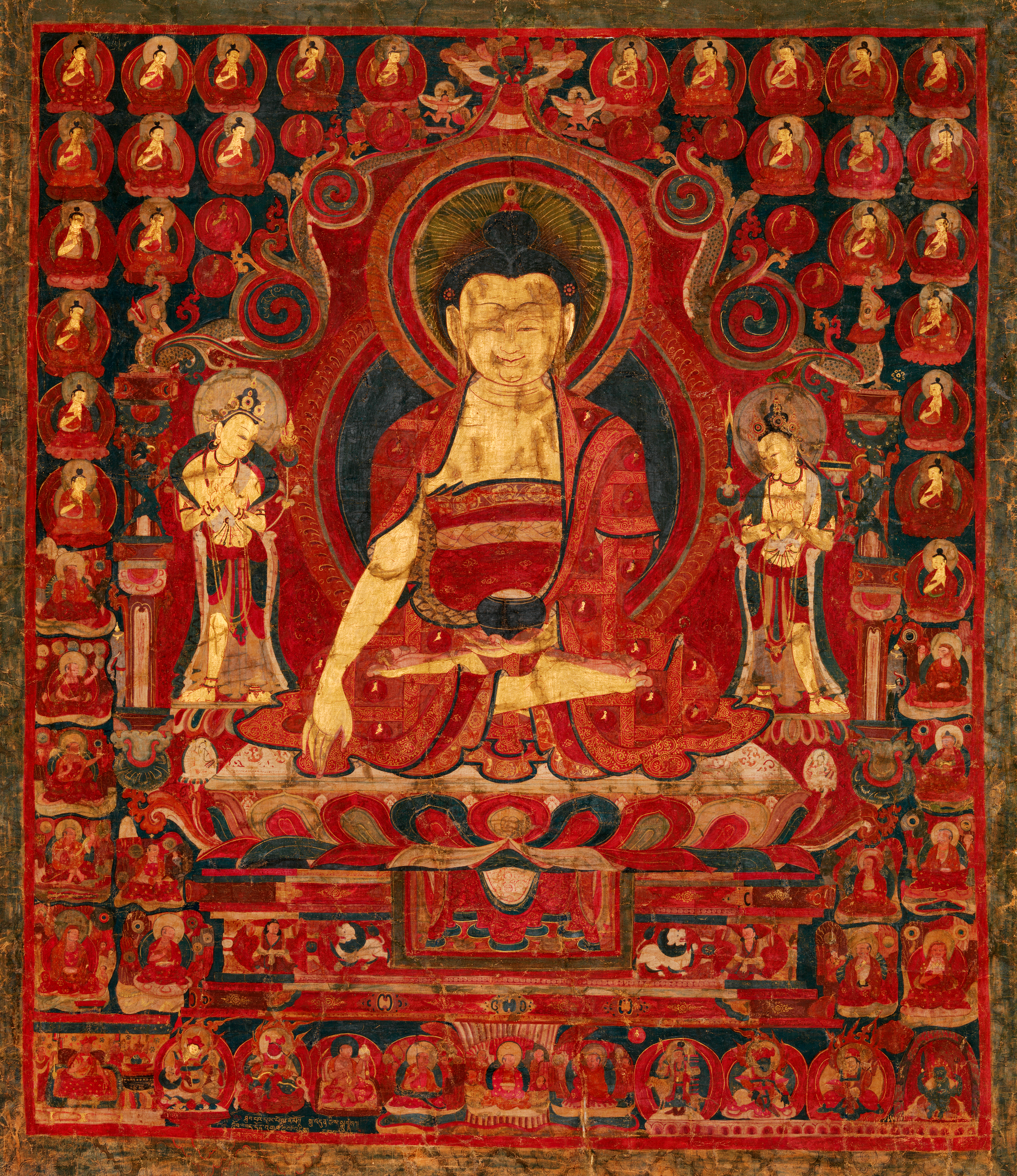
Thangka painting of Lord Buddha Shakyamuni
Origin and Historical Formation of Thangka Paintings
Thangka art originated in Tibet, China, but found fertile ground to develop and become an inseparable part of Nepali culture. The formation of Thangka is closely linked to the introduction and spread of Vajrayana Buddhism into Nepal from the 7th century. Initially, Thangka paintings were used as objects for spiritual practice, meditation, teaching Buddhist doctrines, and worship in monasteries.
The strong cultural exchange between Tibet and Nepal, especially during historical periods when many Tibetan monks and artists migrated to Nepal, brought with them the painting techniques and artistic style of Thangka. In Nepal, influenced by local art schools, Thangka gradually developed its own distinctive characteristics, deeply imprinted with Nepali cultural nuances.
Historical records indicate that around the 14th century, Thangka paintings began to be widely produced in Nepal, with the participation of many talented artists. Royal dynasties and religious patrons encouraged and invested in the creation of Thangka paintings, contributing to the elevation of the techniques and aesthetics of this art form. Over centuries, Thangka paintings have become a medium for disseminating Buddhist thought, a tool for meditation, and a unique work of art with high cultural value.
Introduction and Development in Nepal
As Vajrayana Buddhism spread, ritualistic painting techniques from India and Tibet were introduced into Nepal. Initially, Thangka paintings might have been created on rough cloth or silk, later meticulously crafted with natural pigments. High lamas, monks, and individuals dedicated to Buddhism played a crucial role in disseminating the knowledge and skills of Thangka painting.
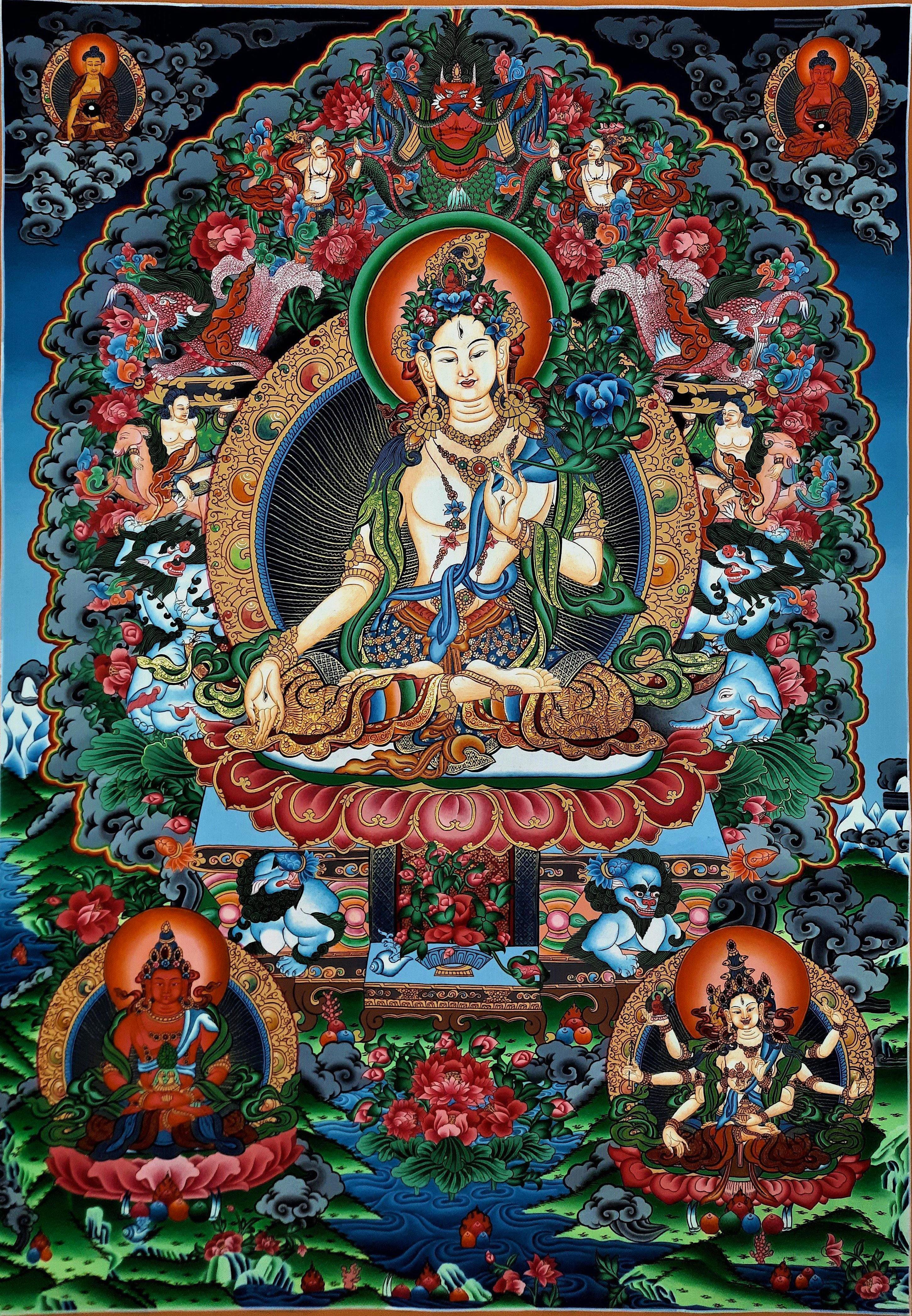
The development of Thangka in Nepal was also influenced by the Newari art schools – an ancient and vibrant indigenous culture in the Kathmandu Valley. This fusion created a unique Thangka style, retaining the core of Tibetan art while incorporating the subtlety, grace, and vibrant colors characteristic of Nepali art.
The Role of Thangka Paintings in Spiritual Life
Thangka paintings are not merely decorative artworks but play a central role in the spiritual life of the Nepali people and followers of Vajrayana Buddhism. They are used in religious ceremonies, serving as aids for meditation, helping practitioners focus on images of Buddhas, Bodhisattvas, and mandalas to achieve enlightenment.
Each Thangka painting tells a story, conveys a teaching, and symbolizes noble qualities that humans should aspire to. They help viewers gain a deeper understanding of Buddhist doctrines, cosmology, and the path to liberation.
Traditional Craftsmanship and Materials
Creating a Thangka painting requires great effort, meticulousness, and profound knowledge of art and religion. The process of crafting a Thangka is a sacred journey, demanding the artist to maintain a pure state of mind, possess intense concentration, and strictly adhere to traditional rules.
The materials used for Thangka painting are primarily natural substances, carefully selected and processed using traditional methods. The refinement in the selection and use of materials contributes to the enduring beauty and unique spiritual significance of each artwork.
Painting Mediums
The primary medium for Thangka painting is cotton or silk fabric. The fabric must be carefully treated to create a smooth surface that adheres well to paint. This treatment process typically involves soaking the fabric in a glue solution, followed by drying and smoothing it with a stone or shell.
The pigments used are natural minerals and plant-based substances, providing vibrant and long-lasting colors. Some common colors include:
- White: From finely ground seashell powder or limestone.
- Yellow: From the mineral Orpiment or plant resins.
- Red: From the mineral Cinnabar or red clays.
- Blue: From Lapis Lazuli (deep blue) or Azurite (light blue) minerals.
- Green: From the mineral Malachite.
- Gold: From pure gold leaf.
- Black: From soot or iron oxide.
These pigment powders are mixed with animal glue (such as glue from cow or goat hide) or plant-based glue to create the paint. The mixing ratio is crucial to ensure the colors do not fade or crack.
Meticulous Painting Process
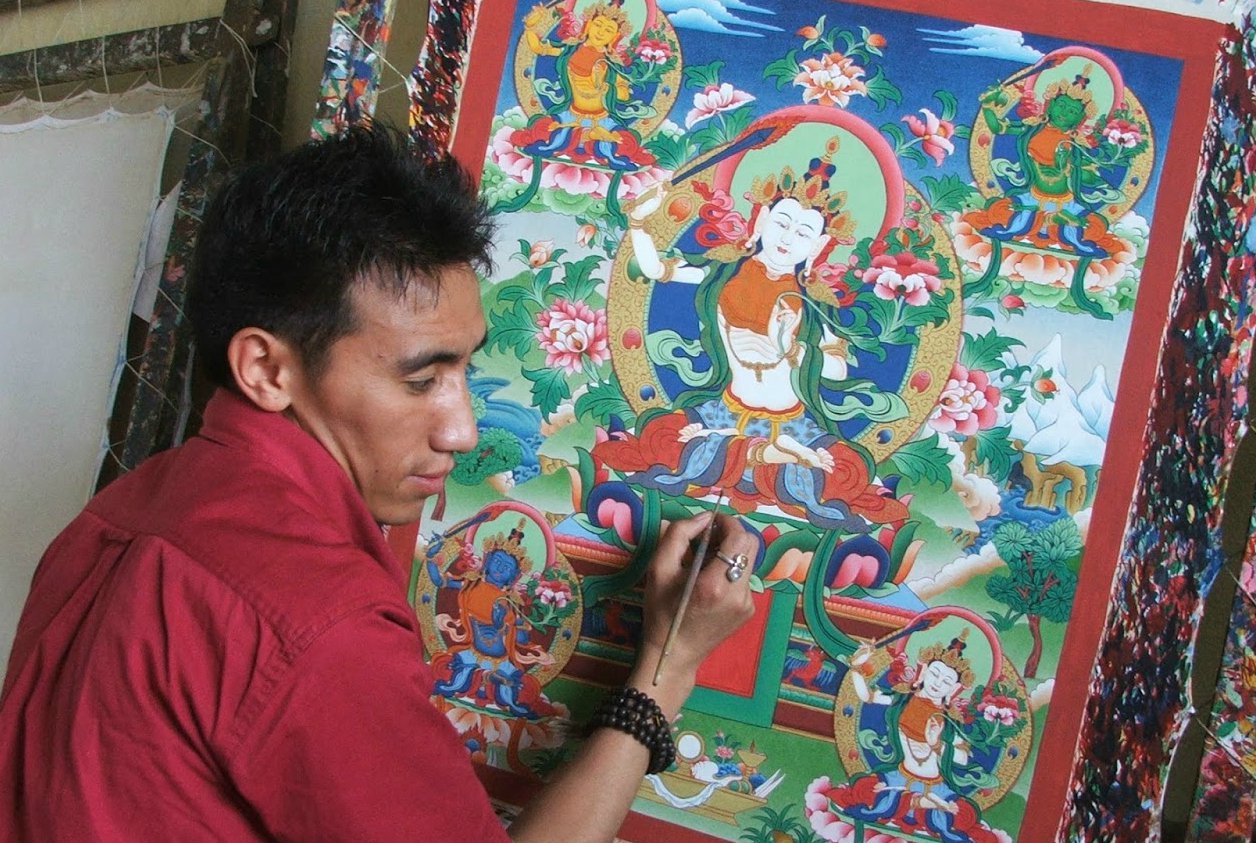
The process of painting a Thangka involves many stages, demanding patience and precision:
- Fabric Preparation: The fabric is stretched on a wooden frame and its surface is treated.
- Sketching: Graphite or charcoal powder is used to draw the basic outlines according to traditional pattern drawings. These lines follow strict geometric proportions to ensure aesthetic and symbolic accuracy.
- Base Coloring: Large color areas are filled in first, usually starting with the background color or the skin tone of the figures.
- Detail Coloring: Small brushes and a variety of colors are used to paint details such as clothing, ornaments, symbols, and facial features.
- Dotting the Eyes and Outlining: This is the final stage, where the eyes of the figures are meticulously dotted, often at the best light of the day, to give the painting life and sanctity. Afterward, the lines are outlined with black to highlight the imagery.
- Finishing: The painting is covered with a thin protective layer and sometimes edged with colored silk for added beauty and durability.
Each Thangka artist typically undergoes years of training, learning from masters to master techniques, symbolic rules, and Buddhist philosophy.
Symbolic Meanings and Profound Philosophy
Thangka paintings are not just visually appealing images but also contain a rich symbolic system that profoundly reflects Vajrayana Buddhist philosophy. Every detail in the painting, from the colors, shapes, and postures of the figures to the surrounding elements, carries a specific meaning.
Understanding the symbolic meaning of Thangka paintings helps viewers connect more deeply with the spiritual content the artwork aims to convey, and can also provide guidance and inspiration on their spiritual path.
Common Symbolic Elements
- Colors: Each color in a Thangka painting has its own meaning. For example: white symbolizes purity and enlightenment; red symbolizes power and energy; blue symbolizes wisdom and boundlessness; yellow symbolizes enlightenment and prosperity.
- Buddhas and Bodhisattvas: Each deity is depicted with specific characteristics regarding posture, expression, attire, and symbolic objects held, representing different qualities and accomplishments. For instance, Lord Buddha Shakyamuni is often depicted in a meditative posture, with his hand in the "earth-touching" mudra (Bhumisparsha Mudra), symbolizing victory over the demon Mara.
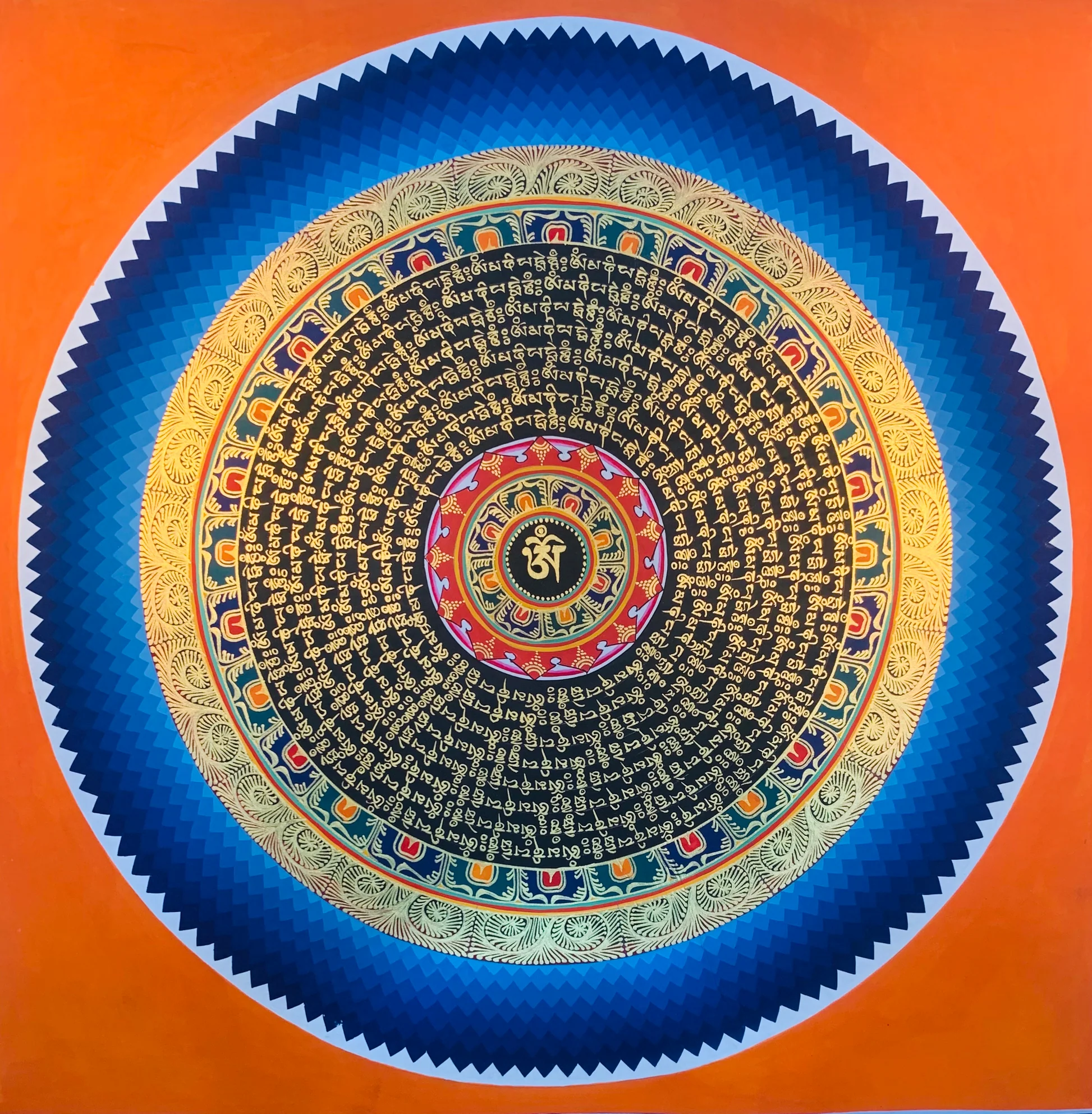
- Mandalas: These are geometric cosmic diagrams, symbolizing harmony, order, and the entire universe. Mandalas are often used as objects of meditation, helping practitioners achieve unity with the cosmos.
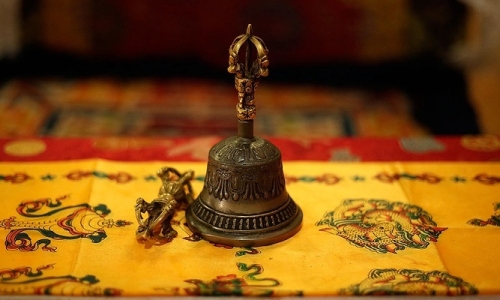
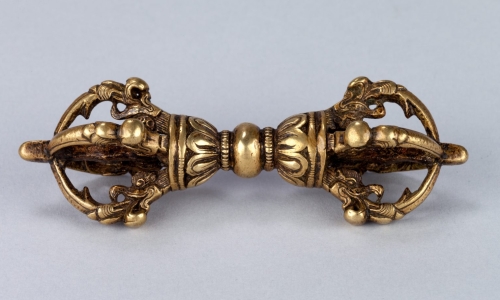
- Minor Symbols: Elements such as the lotus flower (purity, enlightenment), the Dharma wheel (Buddhist teachings), the Vajra (spiritual power, indestructibility), the bell (wisdom), etc., all carry deep meanings.
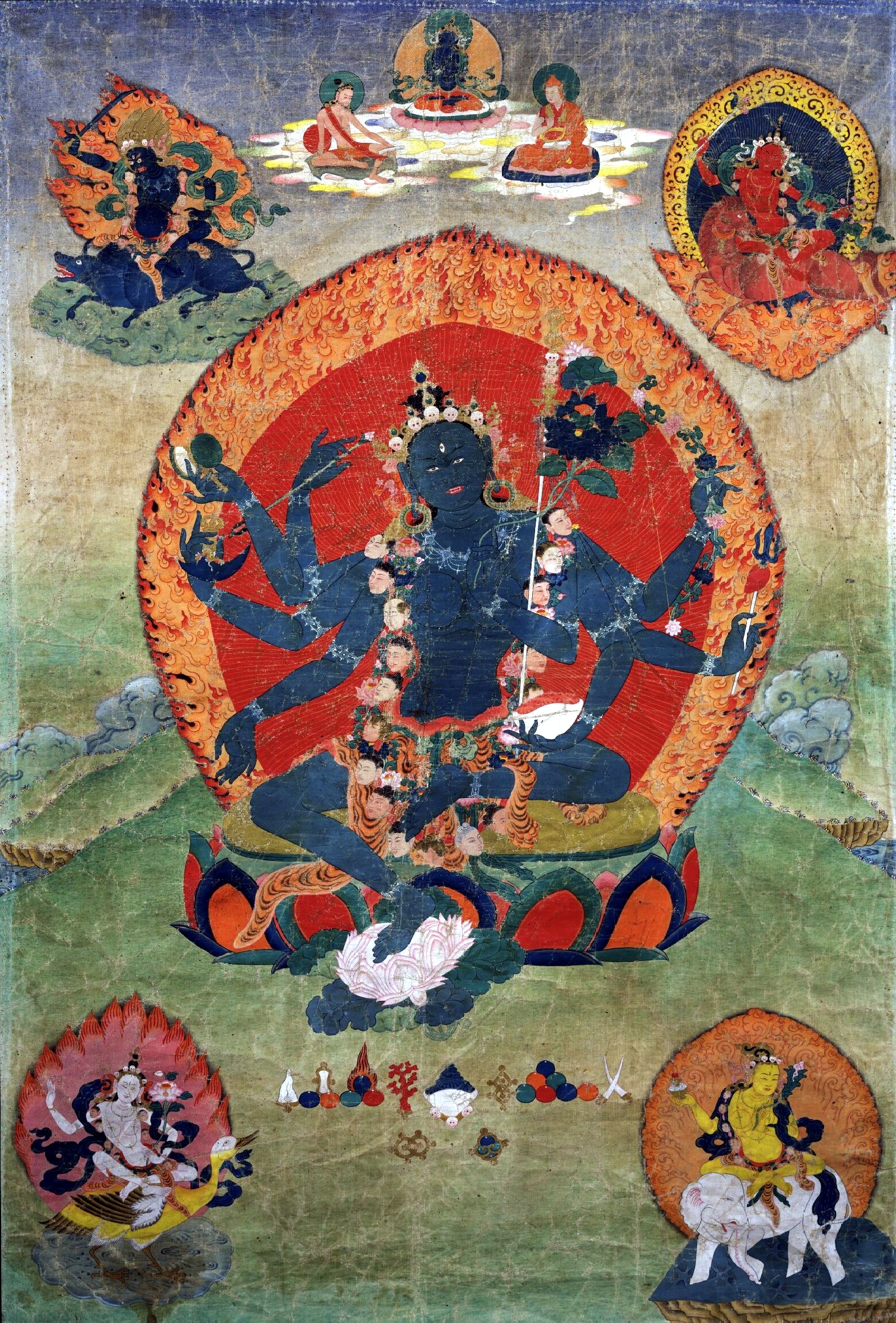
- Protector Deities: Often depicted with fierce appearances, symbolizing the power to protect the Dharma, vanquish ignorance, and overcome obstacles.
Meaning in Meditation and Spiritual Practice
Thangka paintings are powerful tools supporting meditation and practice in Vajrayana Buddhism. By focusing on the images in the painting, practitioners can:
- Concentrate the Mind: Helps to dispel wandering thoughts and bring the mind to a state of tranquility.
- Visualize Deities: Imagine oneself in the presence of Buddhas and Bodhisattvas, connecting with their energy and qualities.
- Understand Teachings: Observe the symbols and stories in the painting to gain a deeper understanding of Buddhist principles, the law of cause and effect, and the path to liberation.
- Accumulate Merit: Gazing upon and revering Thangka paintings is also considered a way to accumulate merit.
Each Thangka painting is a "map" leading to enlightenment, a reminder of life's ultimate purpose. They help viewers recognize the impermanent nature of all things and find peace and liberation in the present moment.
Thangka Schools and Cultural Influence
Over time, Thangka paintings have evolved into various schools, each with its own style and characteristics, reflecting the cultural and artistic diversity of Nepal:
- Kadam School: Possesses a classic style, emphasizing clarity and solemnity in composition.
- Karma Gardri School: Noted for its vibrant colors, soft lines, and often features majestic mountain landscapes.
- Menri School: Combines Tibetan painting techniques with Newari aesthetics, creating exquisite detail in every brushstroke.
- Tsang School: Tends to use warm, muted color tones, focusing on intricate decorative details.
The influence of these schools is not limited to Nepal but also extends to countries where Vajrayana Buddhism is practiced, creating a precious artistic and cultural heritage for humanity.
Popular Themes in Thangka Paintings
Thangka paintings are a versatile medium, encompassing numerous themes related to Buddhism and spiritual culture. These themes typically revolve around the life of the Buddha, Bodhisattvas, enlightened masters, lineage stories, and cosmic symbols.
The choice of theme for a Thangka painting is often based on spiritual needs, intended use (e.g., for altars, offerings, meditation aids), and the teachings of masters.
The Life of Lord Buddha Shakyamuni
One of the most popular themes is the depiction of the life of Lord Buddha Shakyamuni, from his birth, renunciation, ascetic practices, attainment of enlightenment under the Bodhi tree, to his preaching and parinirvana. These paintings are often rendered sequentially, allowing viewers to follow and contemplate the life of the Enlightened One.
- Birth: Typically depicts Queen Maya giving birth to Prince Siddhartha under the Sal tree, and the Prince taking his first seven steps.
- Renunciation: The image of Prince Siddhartha leaving the royal palace, his parents, and his family, to don the robes of a monk.
- Asceticism: Depicts the period of his severe ascetic practices, followed by receiving milk and rice porridge.
- Enlightenment: The scene of the Buddha meditating under the Bodhi tree, conquering the demon Mara, and achieving complete enlightenment.
- Turning the Dharma Wheel: The image of the Buddha giving his first sermon at the Deer Park to the five ascetics.
- Parinirvana: The scene of the Buddha peacefully entering the state of unconditioned nirvana.
Bodhisattvas and Protector Deities
Thangka paintings also vividly portray Bodhisattvas and protector deities, beings who have vowed to liberate sentient beings. Each deity has unique characteristics and meanings:
- Avalokiteshvara (Guan Yin): The embodiment of boundless compassion. Often depicted with multiple arms, each holding a different symbolic object, or in various manifestations such as the Thousand-Armed Avalokiteshvara.
- Manjushri: The embodiment of wisdom. Often holds the sword of wisdom to cut through ignorance and the Prajnaparamita Sutra.
- Vajrapani: The embodiment of spiritual power. Often depicted with an imposing expression, holding the Vajra scepter.
- Medicine Buddha (Bhaiṣajyaguru): The Buddha of healing, bestowing health and longevity.
- Maitreya: The future Buddha, symbolizing joy and rebirth.
- Dharmapalas (Protectors): Such as Yamantaka, Mahakala, Vajrabhairava, often have fierce forms, representing the victory over evil forces and the protection of the path to enlightenment.
.jpg)
Protector MAHAKALA
Mandalas and Pure Lands
Mandalas are among the central symbols in Vajrayana Buddhism and are also an important theme in Thangka paintings. Mandalas symbolize the universe, the unity of all things, and are powerful tools for meditation.
- Kalachakra Mandala: One of the most complex and important mandalas, symbolizing time and the workings of the universe.
- Guhyasamaja Mandala: Related to secrecy and supreme wisdom.
- Chakrasamvara Mandala: Symbolizes the union of skillful means and wisdom.
In addition, Thangka paintings depict "Pure Lands" of various Buddhas, where sentient beings can be reborn to continue their spiritual practice in a favorable environment.
The Eight Auspicious Symbols (Ashtamangala)
The eight auspicious symbols frequently appear in Thangka paintings, bringing good fortune and blessings:
- Parasol: Symbolizes protection from afflictions.
- Golden Fish: Symbolize freedom and liberation from the ocean of suffering (samsara).
- Vase (Treasure Vase): Symbolizes abundance, fulfillment, and the granting of all wishes.
- Lotus Flower: Symbolizes purity and enlightenment, untainted by the world.
- Endless Knot: Symbolizes eternal connection, compassion, and boundless wisdom.
- Victory Banner: Symbolizes victory over all obstacles, afflictions, and the attainment of enlightenment.
- Wheel of Dharma: Symbolizes the Buddhist teachings and the path to liberation.
- Ruyi Scepter (Jewel): Symbolizes success and fulfillment in all endeavors.
Preservation and Development of Thangka Art
In the context of the modern world, Thangka art faces both challenges and opportunities. The rapid advancement of media and changes in lifestyle and market demands can affect the traditional nature of this art form. However, these very factors also open new avenues for preserving and promoting the value of Thangka.
Many organizations, individuals, and artisan communities are striving to maintain traditional painting techniques, pass them down to younger generations, and simultaneously find ways to make Thangka art more accessible to the general public.
Current Challenges
- Erosion of Traditional Techniques: Finding natural materials is becoming increasingly difficult, and the training of artisans is time-consuming and labor-intensive, which may deter many young people.
- Competition from Popular Art: More modern and easily accessible art forms may diminish interest in traditional Thangka paintings.
- Over-commercialization: Mass production of Thangka paintings for commercial purposes can reduce the artistic and spiritual value of the artworks.
Preservation and Development Efforts
To address these challenges, various initiatives are underway:
- Art Training Centers: Numerous schools and cultural centers in Nepal and Tibet have established Thangka painting courses, focusing on imparting traditional techniques and knowledge.
- Research and Restoration: Cultural researchers and conservation experts are working to conduct in-depth studies on the history and techniques of Thangka, as well as restoring damaged ancient paintings.
- Technological Application: The use of digital technology for archiving, promoting Thangka paintings, and even creating digital versions helps reach a large global audience.
- Promoting Cultural Tourism: Cultural tours and Thangka art exhibitions are organized to introduce the beauty and value of this art form to international tourists.
- Contemporary Thangka Art: Some young artists are experimenting with incorporating modern elements into Thangka paintings, creating unique works that reflect the current era while retaining the traditional spirit.
The development of Thangka art is a testament to the strong vitality of traditional culture. With the collective efforts of artists, scholars, and the community, the art of Thangka painting hopes to continue to shine, bringing its profound spiritual and artistic values to the world for generations to come.
CONTACT INFORMATION:
Dzogchen Travel Co., Ltd.
Address: 151-153 Phu Tho Hoa Street, Phu Tho Hoa Ward, Ho Chi Minh City
Hotline: 0833939768
Phone: 0833939768
Email: xuan@dzogchentravel.com
Website: dzogchentravel.com