

In the endless flow of life, we sometimes find ourselves lost amidst worries and concerns, seeking a spiritual anchor, a way out of the entanglements of karma. On this spiritual journey, the prayer wheel (Mani Wheel) emerges as a sacred symbol, a miraculous tool offering hope for purification and liberation. Can a single spin truly cleanse ten thousand miles of karma, opening the door to peace and happiness?
Origins and Sacred Meaning of the Prayer Wheel
The prayer wheel, also known as the Mani Wheel, is an indispensable ritual object in Vajrayana Buddhism, particularly prevalent in Tibet, Ladakh, Bhutan, and regions deeply influenced by Himalayan Buddhist culture. It is not merely a decorative item or a unique cultural artifact, but a vessel of profound spiritual value and a powerful aid on the path of practice and karma transformation.
History of Formation and Development
The origin of the prayer wheel is believed to stem from the teachings of Lord Buddha Shakyamuni. It is said that he taught that spinning a prayer wheel bestows merit equivalent to reciting the mantra Om Mani Padme Hum billions of times. The power of sound, of prayer, is accumulated and disseminated through the wheel's rotation.
According to legend, Ananda asked the Buddha about the practice for liberation from the cycle of rebirth and the eradication of karma. The Buddha then instructed on creating a wheel inscribed with the mantra Om Mani Padme Hum within and spinning it. He emphasized that each rotation of the wheel carries the power of the mantra, helping the practitioner accumulate merit, purify the mind, and transform negative karma.
Over centuries, the prayer wheel has become a familiar and important symbol in the spiritual life of people in countries following Vajrayana Buddhism. They come in various sizes, from small handheld mani wheels that pilgrims can carry, to large wheels permanently installed in monasteries, stupas, or along pilgrimage routes.
Structure and Symbolism
A prayer wheel typically consists of the following main components:
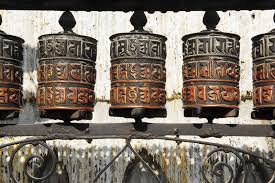
- The Wheel Body: Usually made of metal (brass, silver, gold) or wood, it contains scrolls inscribed or printed with the mantra Om Mani Padme Hum. The number of scrolls, the density of text, and the content within may vary depending on the tradition and the intent of the maker.
- The Axle: Allows the wheel to rotate around a fixed axis.
- The Handle (for small wheels): Enables the practitioner to easily spin the wheel.
Each element of the prayer wheel carries profound symbolic meaning:
- The Mantra Om Mani Padme Hum: This is the core of the prayer wheel, the primary source of energy. Each syllable of the mantra holds a miraculous meaning, believed to purify the mind, alleviate suffering, and lead the reciter to enlightenment.
- The Wheel: Symbolizes the Dharma Wheel, representing the Buddha's teachings, which are always in motion and spreading. The act of spinning the wheel also symbolizes turning the wheel of Dharma, bringing its teachings into life.
- The Five Colors on the Wheel (commonly seen): Each color has its own meaning, symbolizing the five wisdoms, five Buddhas, five faculties, five strengths, or various aspects of enlightenment.
The combination of these elements creates a powerful ritual object, serving not only as a tool for practice but also as a constant reminder of the path to liberation.
.jpg)
Spiritual Benefits of Spinning the Prayer Wheel
The act of spinning the prayer wheel is more than a ritual; it brings tangible benefits to the practitioner on both spiritual and mental levels. Faith, sincerity, and a benevolent intention are crucial for these benefits to be fully realized.
Eradicating Karma and Accumulating Merit
This is the most frequently cited benefit of the prayer wheel. Each spin, corresponding to the recitation of the mantra Om Mani Padme Hum, is believed to have the power to dissolve negative karma accumulated over countless lifetimes. Karmic obstacles, whether minor or significant, can be gradually purified through this practice.
In addition to eliminating negative karma, spinning the prayer wheel also helps accumulate boundless merit. This merit can be dedicated to oneself, one's family, sentient beings, or all beings in the world, contributing to a peaceful and happy environment.
His Holiness the Dalai Lama taught: "When you spin the prayer wheel, you are turning the wheel of Dharma. This benefits you and all sentient beings. Each rotation brings benefits equivalent to reciting the mantra Om Mani Padme Hum one million times."
Purifying the Mind and Transforming Afflictions
The human mind is often clouded by afflictions such as greed, anger, ignorance, pride, doubt, and wrong views. These afflictions are the root of all suffering. When practicing spinning the prayer wheel with mindfulness, practitioners gradually calm the disturbances within their minds, reducing attachment, hatred, and other negative states.
The act of focusing on the wheel's movement and the mantra's sound helps the mind become calm, reducing distraction and wandering. This stillness creates space for wisdom to arise, enabling the recognition of the true nature of all phenomena and leading to liberation from delusion.
Spinning the wheel is not just a physical action but also a meditation practice that cultivates mindfulness and awareness. Gradually, practitioners will experience inner peace, even when facing life's challenges.
Connecting with Sacred Energy
The prayer wheel is considered a conduit, a means to connect the practitioner with the sacred energy of Buddhas, Bodhisattvas, and enlightened beings. When spinning the wheel with faith and reverence, practitioners can feel the blessings, protection, and guidance from these positive energies.
The energy from the prayer wheel is believed to dispel negative influences and protect the practitioner from dangers and misfortunes. It brings peace of mind, hope, and spiritual strength to overcome difficulties.
Generating Merits and Opening the Path to Enlightenment
In Buddhist philosophy, all virtuous actions generate merit. Spinning the prayer wheel, with the intention of purification, merit accumulation, and the aspiration for enlightenment, is an act of immense merit generation. This merit will serve as a strong foundation for progress on the spiritual path.
It helps open the doors of wisdom, compassion, and deep understanding of the nature of reality. Gradually, the path to enlightenment will become clearer, less arduous, and more accessible.
Many practitioners share that after consistently spinning the prayer wheel for some time, their lives become smoother, they encounter more good fortune, and difficult problems are resolved naturally.
.jpg)
How to Practice with the Prayer Wheel
To maximize the benefits of spinning the prayer wheel, the practice should be accompanied by understanding, reverence, and a benevolent intention. Here are detailed instructions for correct and effective practice.
Preparing Your Mind and Ritual Object
Before beginning, find a quiet, clean space where you can focus without interruption. This could be a dedicated corner of your room, a sacred spot in your home, or a spiritual site visited during a pilgrimage.
Regarding the ritual object, you can purchase a prayer wheel that suits your means and intentions. There are many types available, from small handheld wheels to large wall-mounted ones, and even those powered by wind or water. The most important aspect is that you feel a connection and reverence towards the object.
Cleanse your body and wear clean attire. Internally, cultivate compassion, sincere repentance for past mistakes, and make a vow to practice for the benefit of yourself and all beings.
Spinning the Wheel
Direction of Rotation: According to Buddhist tradition, prayer wheels are typically spun clockwise. This symbolizes the spreading of the Dharma and progress on the path to enlightenment.
The Mantra Om Mani Padme Hum: As you spin the wheel, slowly recite the mantra Om Mani Padme Hum mentally or aloud. The key is to maintain continuity and focus on each syllable. Don't be overly concerned with perfect recitation or the number of times; concentrate on bringing your sincere intention to each rotation.
Bodhi Mind: Direct your mind towards compassion and love for all sentient beings. Reflect on impermanence, the nature of suffering, and pray for all beings to be free from suffering, attain peace, and reach enlightenment.
Mindfulness: Maintain mindfulness throughout the practice. Pay attention to the sensation of your hand touching the wheel, the sound of the mantra, and the steady rotation. If your mind wanders, gently bring it back to the object of meditation.
Number of Rotations: You can spin the prayer wheel as many times as you wish. There is no strict requirement. Consistency and sincerity are paramount. Some people choose to spin 108 times daily, a number considered sacred in many traditions.
Dedication of Merit
After completing the spinning of the wheel, take a few moments to dedicate the accumulated merit. You can dedicate it to yourself, your family, friends, loved ones, those facing difficulties, and all beings in the universe.
A simple dedication prayer could be: "May this merit be dedicated to all sentient beings. May all be peaceful, happy, and attain enlightenment soon."
Integrating with Other Activities
Spinning the prayer wheel can be combined with various spiritual activities. When you have the opportunity for spiritual travel or volunteer tourism to sacred places like Tibet, Ladakh, or Nepal, you will easily encounter giant prayer wheels. This is a wonderful chance to join local people in spinning the wheels, experiencing the connection and spiritual energy of these places.
If you enjoy domestic or international tours with a spiritual element, research destinations with prayer wheels or monasteries and stupas to practice. Even at home, keeping a small prayer wheel and practicing daily brings immense benefits.
Additionally, you can combine spinning the prayer wheel with reading scriptures, chanting, or meditation to enhance the effectiveness of your practice.
Real-Life Stories and Advice from Masters
Stories of transformation through prayer wheel practice are abundant. They are vivid testaments to the power of faith, perseverance, and reverence. Here are some stories and precious advice from spiritual masters.
Inspiring Stories
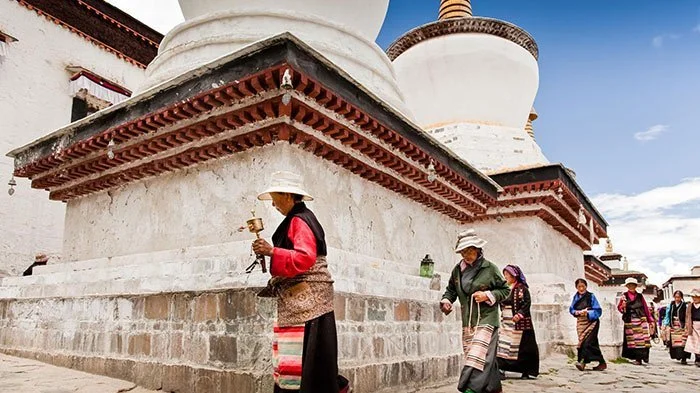
In the lands of Vajrayana Buddhism, the sight of elderly villagers, with calloused hands, patiently spinning prayer wheels along steep paths, high mountain peaks, or around monasteries, is a common and touching scene. They may not have extensive education, but they possess unwavering faith in the power of the prayer wheel.
One story tells of a young woman suffering from a terminal illness, for whom medicine offered no hope. She sought the guidance of a monk who advised her to spin the prayer wheel daily. Initially, she practiced out of desperation, but gradually, she felt inner peace, and her health began to improve miraculously. Years later, she was fully recovered and became a happy woman filled with gratitude.
A tourist on a spiritual tour to Ladakh shared that he didn't believe in mystical things until he witnessed how the local people faced harsh living conditions with serenity and compassion. Seeing hundreds, even thousands, of people spinning prayer wheels together filled him with a powerful energy that soothed his inner tensions and anxieties.
Advice from Spiritual Masters
Spiritual masters consistently emphasize that the prayer wheel is merely a tool. The most crucial element lies in the practitioner's mind.
His Holiness the Dalai Lama often teaches: "What is important is not the number of times you spin the wheel, but the attitude you bring to it. Spin it with compassion, with understanding, and with the wish to benefit all beings."
Another Lama in Tibet said: "Karma is like dark clouds obscuring the sky. The prayer wheel is like sunlight; it cannot dissipate the clouds instantly, but if you shine it persistently, the clouds will gradually fade." This advice highlights the importance of perseverance and consistency in practice.
Above all, sincerity is key. Do not practice the prayer wheel merely to gain something, or just because others are doing it. Practice with a genuine desire for self-transformation, to live a meaningful life, and to benefit the world.
When participating in international or domestic tours with a spiritual aspect, thoroughly research the meaning of ritual objects and ceremonies. This will help you prepare mentally and with understanding to practice more profoundly.
The Prayer Wheel in the Context of Modern Spiritual Tourism
In today's fast-paced modern society, the desire for inner peace and spiritual experiences is growing. Spiritual tourism and volunteer tourism have become popular trends. The prayer wheel plays a significant role in creating these meaningful experiences.
Integration with Spiritual Tours
Contemporary spiritual tours are often designed to offer visitors opportunities to experience unique cultural and religious activities. Visiting monasteries, stupas, and participating in prayer wheel spinning is an integral part of many journeys to sacred regions like Ladakh, Dharamsala (India), Bhutan, or the northern mountainous regions of Vietnam with strong Buddhist influences.
During these tours, travelers not only admire majestic natural landscapes but also gain deeper insights into the meaning of the prayer wheel, and receive guidance on how to practice from monks or local people. These experiences foster a profound connection with culture and spirituality, leaving travelers feeling refreshed, purified, and finding new meaning in life.
Volunteer Tourism and Prayer Wheels
Volunteer tourism goes beyond helping communities; it's a journey of self-discovery through contribution. In volunteer activities, contributing to the construction or renovation of spiritual structures like monasteries, stupas, or installing public prayer wheels is also a form of merit accumulation. Participants not only help preserve and promote cultural and spiritual values but also accumulate merits for themselves.
Spinning prayer wheels together after volunteer work creates an atmosphere of community, sharing, and spreading positive energy. These are precious moments that help people feel connected to the universe and the meaning of giving.
Spiritual Accommodation and Travel
When planning a spiritual trip, choosing suitable accommodation, flights, and car rental services contributes to a smooth and fulfilling journey. Many hotels in spiritual tourism destinations offer quiet, serene environments conducive to personal meditation or spiritual practices. Car rental services can also be arranged to transport visitors to remote spiritual sites.
Visas are an important factor for international tours. Thorough and seamless visa preparation will ensure that travelers' spiritual journeys are uninterrupted.
Learning from Tour Guides
A tour guide knowledgeable about culture, religion, and passionate about their work will be an invaluable companion on a spiritual journey. They not only provide information but can also share stories and profound meanings of ritual objects like the prayer wheel, offering travelers a comprehensive perspective and a richer experience. Event organization, especially cultural and spiritual events, requires meticulous preparation to deliver the best value to participants.
Travel packages combining multiple services such as flights, hotels, and spiritual tours are also becoming increasingly popular, helping travelers save time and money, allowing them to focus entirely on their spiritual experience.
Conclusion: A Spin Carrying Hope
The prayer wheel, from an ancient symbol of Vajrayana Buddhism, has transcended geographical and cultural boundaries to become a source of inspiration and a practice tool for many worldwide. The act of spinning the wheel is not merely a physical gesture but a sending forth of one's aspirations, compassion, and the desire for liberation from suffering.
In today's turbulent modern life, the prayer wheel reminds us of the importance of pausing, listening to our inner voice, and seeking inner peace. It exemplifies that sometimes, the solutions to life's most complex problems lie in simple, sincere, and consistent actions.
Whether you are on a spiritual journey to a distant land or simply seeking a way to purify your soul at home, remember that each spin of the prayer wheel carries hope, carrying prayers for a world of peace, happiness, and enlightenment for all beings.
---
Contact Information:
DZogchen Travel Co., Ltd.
Address: 151-153 Phu Tho Hoa Street, Phu Tho Hoa Ward, Ho Chi Minh City
Hotline: 0833939768
Phone: 0833939768
Email: xuan@dzogchentravel.com
Website: dzogchentravel.com