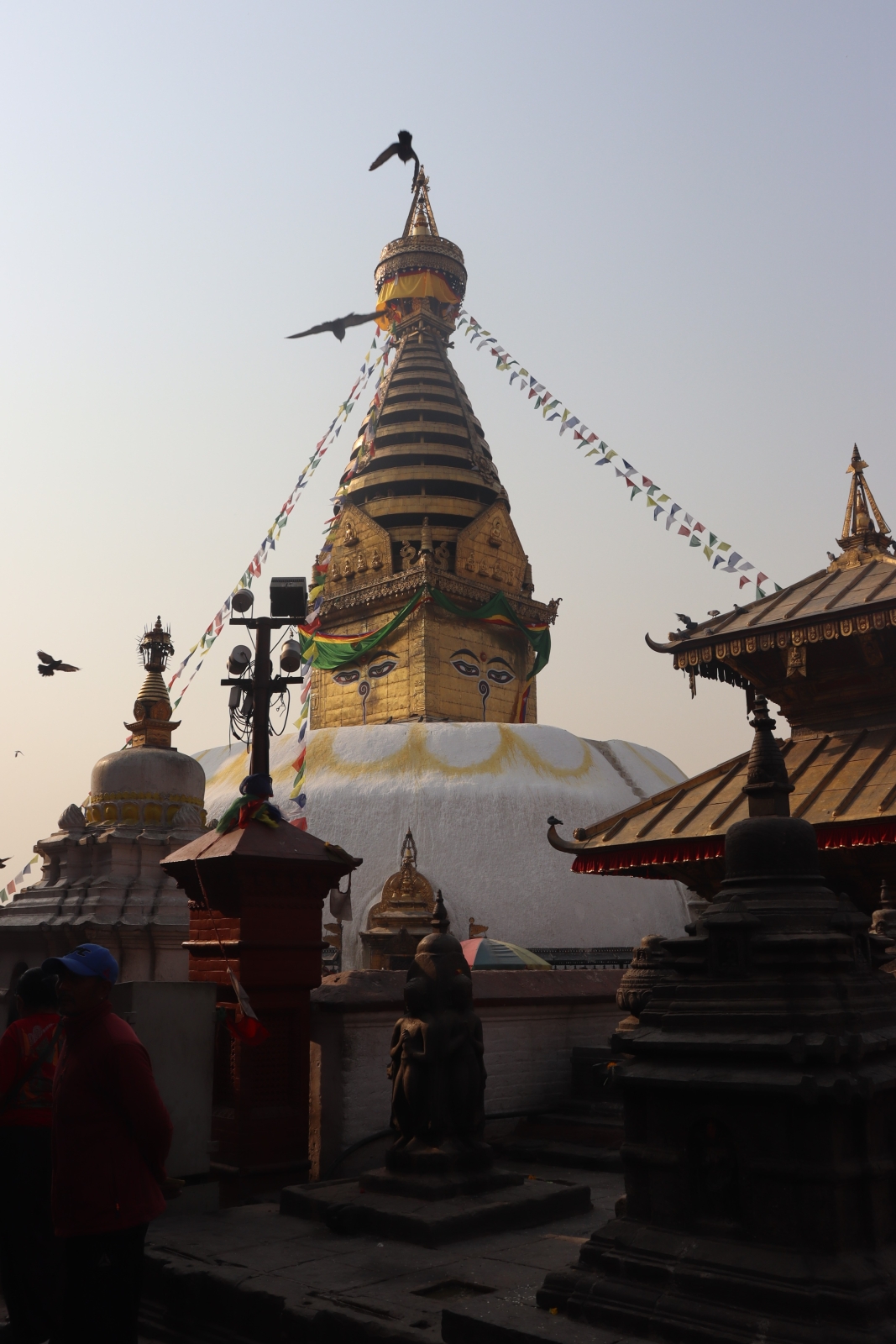


Swayambhunath, also known as the Monkey Temple, is not only a majestic religious architectural complex but also a profound cultural and historical symbol of Nepal, perched atop a lush green hill overlooking the enchanting Kathmandu Valley. It offers a unique spiritual experience where visitors can find inner peace, admire ancient architectural art, and interact with its special residents – troops of playful monkeys. This article will take you on a journey to explore every facet of Swayambhunath, from its origin story and unique architecture to its spiritual significance and must-have experiences when visiting.
History and Legends
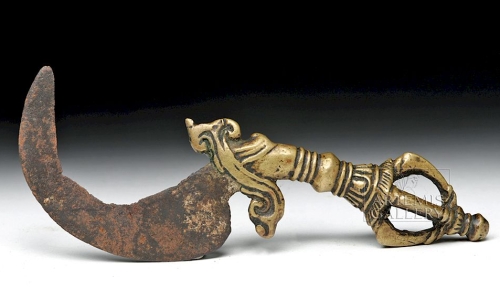
From the very first glance, Swayambhunath exudes an ancient and sacred aura, holding within it thousands of years of history. Legend has it that the Kathmandu Valley was once a vast lake. A Bodhisattva named Manjushri saw a beautiful lotus flower blooming in the middle of the lake, emitting a brilliant light. He used his divine sword to cut through the mountains, allowing the lake water to drain out and creating the fertile Kathmandu Valley we see today. The lotus flower transformed into the hill where Swayambhunath is located, and the temple was built to honor this sacred spot.
The Temple's Genesis
Archaeological evidence suggests that the Swayambhunath area has been inhabited and used for religious practices since around the 5th century CE. The main temple, with its characteristic dome-shaped stupa, is believed to have been built by King Manadeva around 460 CE. Over centuries, Swayambhunath has undergone numerous renovations, expansions, and developments, becoming an important Buddhist center attracting devotees from all over the world.
The Fusion of Buddhism and Hinduism
A unique aspect of Swayambhunath is the parallel existence and harmonious blend of Buddhist and Hindu elements. Although primarily known as a Buddhist center, the temple also features numerous shrines and intricate sculptures dedicated to Hindu deities. This peaceful coexistence reflects the diverse and tolerant nature of Nepalese culture, where different religions co-exist and respect each other. This further enhances the value and appeal of this architectural complex, attracting both Buddhists and Hindus, as well as visitors from all cultural backgrounds.
Unique Architecture and Symbolism
The architecture of Swayambhunath is a harmonious blend of Tibetan Buddhist style and indigenous Nepalese craftsmanship, creating an impressive complex rich in symbolic meaning.
The Central Stupa
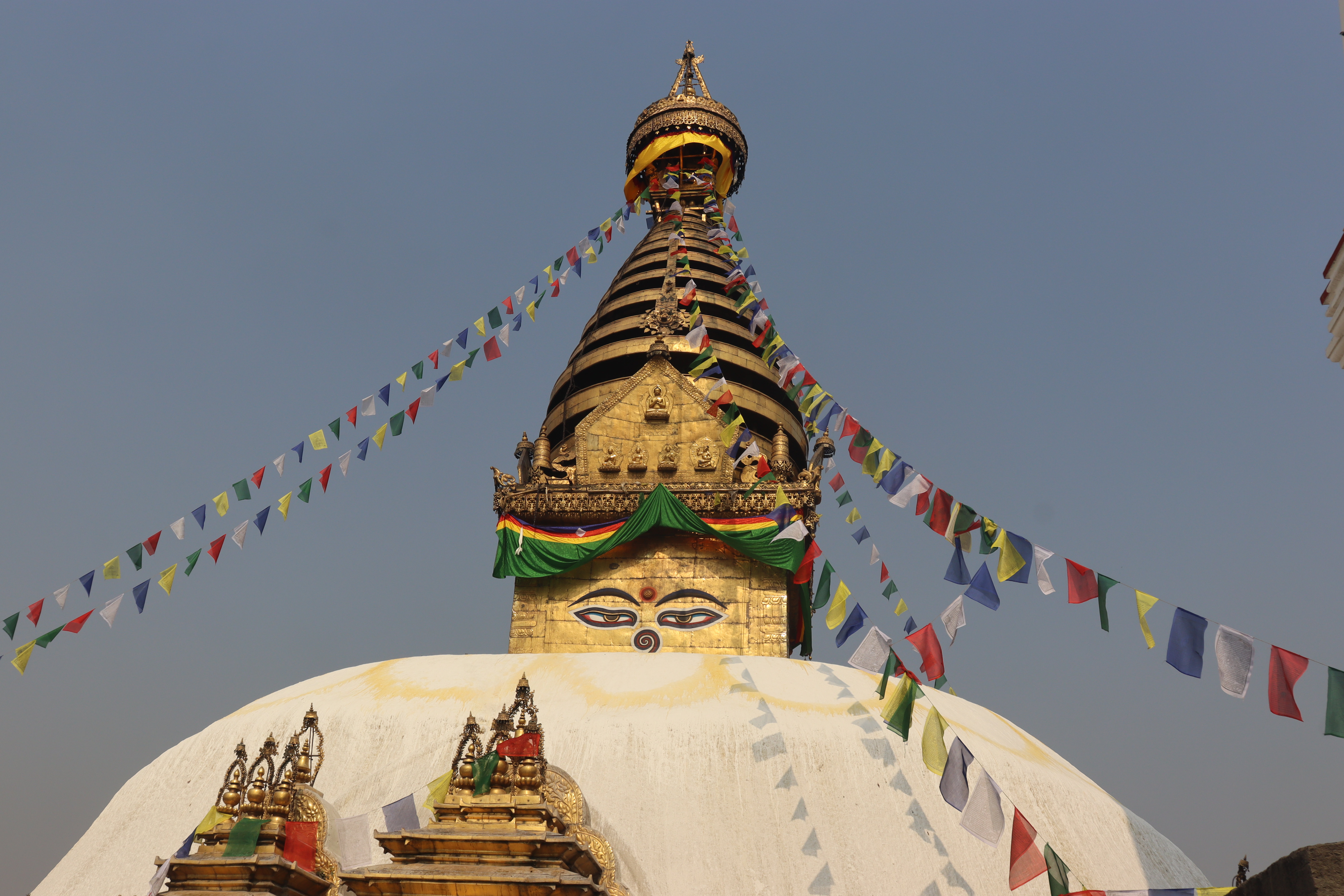
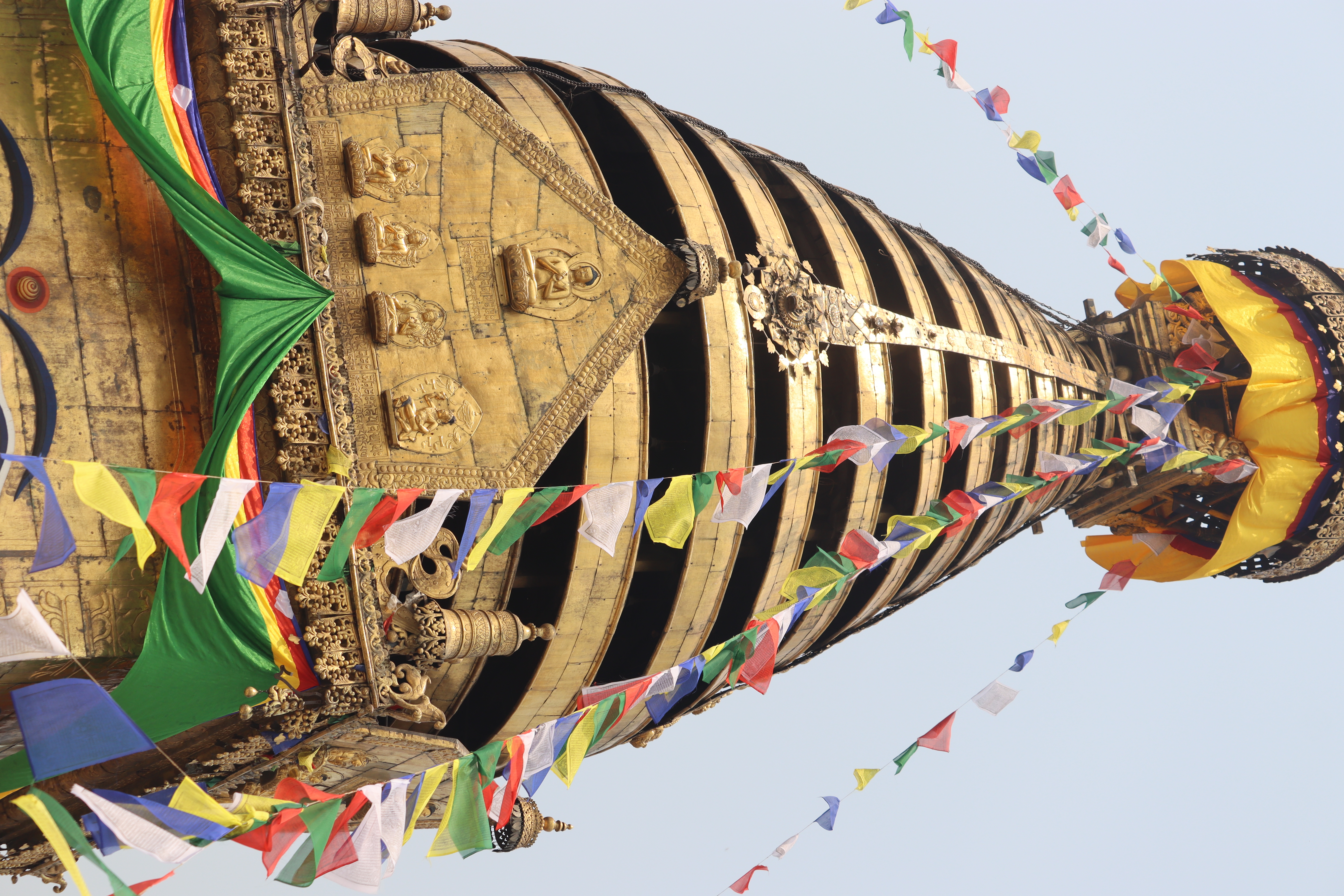
The central highlight of Swayambhunath is the large, hemispherical stupa, with its upper tiers narrowing progressively. On each face of the stupa, you'll find the eyes of the Buddha gazing in four directions, symbolizing His infinite wisdom and compassion. Between the two eyes is a third eye, representing enlightened wisdom. The decorative motifs on the stupa, including octagonal and conical elements above, all carry profound meanings within Buddhist philosophy regarding the universe and the path to enlightenment.
Temples and Artworks
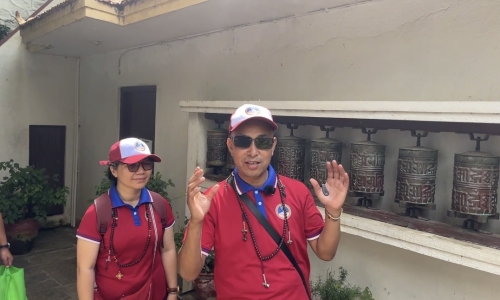
Surrounding the central stupa are countless small temples, chaityas (stupas), Buddha statues, mani wheels (prayer wheels), and exquisite bas-reliefs. Each structure is a unique work of art, showcasing the skill of ancient artisans. Notably, the metal prayer wheels are elaborately adorned with the mantra "Om Mani Padme Hum" inscribed deeply. When visitors spin these wheels clockwise, they believe they accumulate merit and send their prayers to the Buddha.
Symbols of Dragons and Deities
You will easily notice the presence of dragons in many parts of the Swayambhunath complex, especially on the steps leading up to the temple. In Nepalese culture, dragons often symbolize strength, prosperity, and protection. Alongside these, statues of Hindu deities such as Saraswati, Lokeshwor, and Tara are also present, emphasizing the cultural and religious confluence here.
Profound Spiritual Significance
Swayambhunath is not just an architecturally captivating tourist destination but also an important spiritual center where visitors can find tranquility and contemplate life.
A Pilgrimage Site for Buddhists
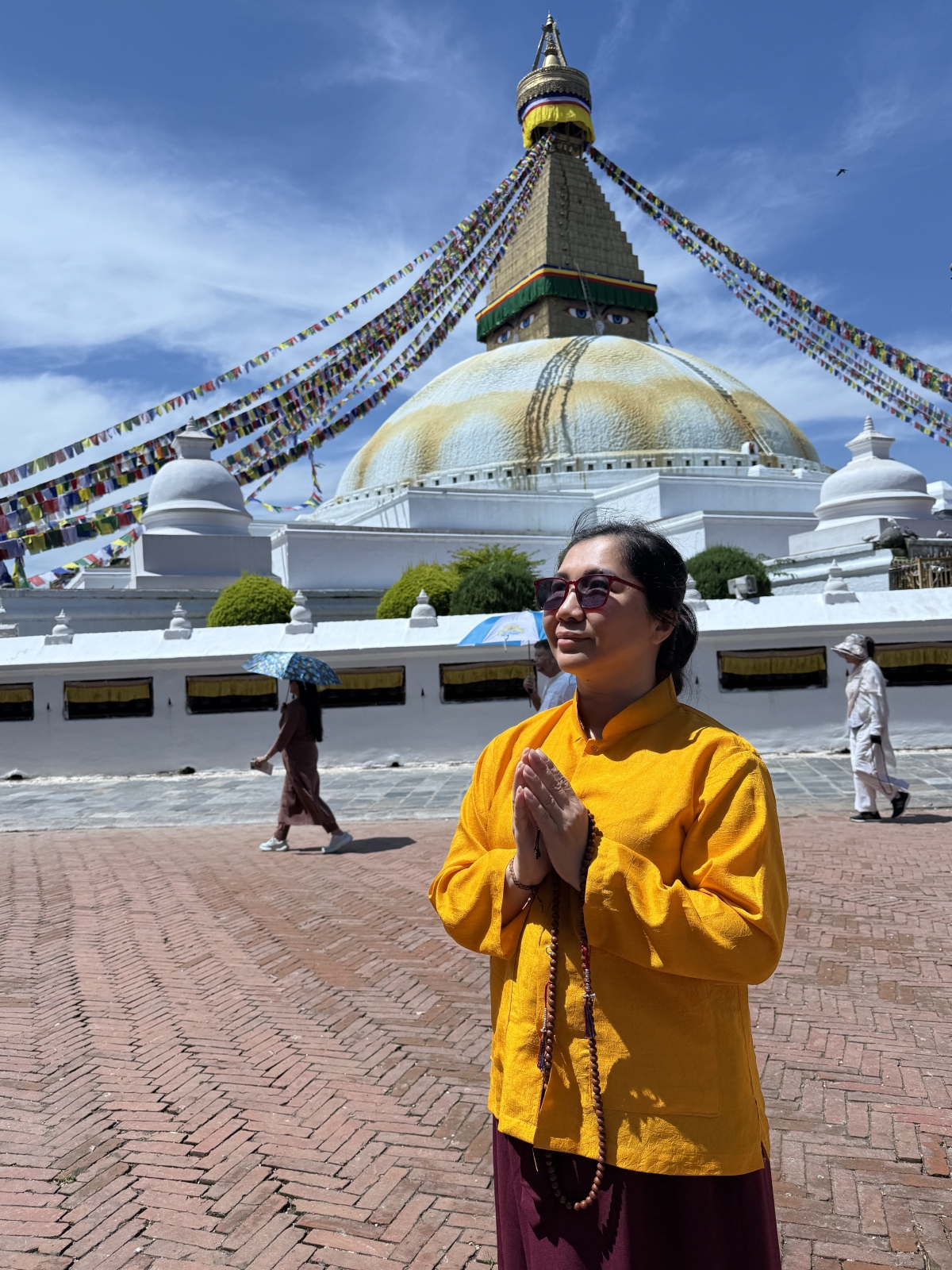
For millions of Buddhists worldwide, Swayambhunath is one of the most sacred pilgrimage sites. It is believed that Lord Buddha Shakyamuni himself visited and bestowed his blessings here. Many come to pray for peace, health, and wisdom, and to perform traditional religious rituals such as circumambulating the stupa, chanting, and meditation.
Rituals and Festivals
Throughout the year, Swayambhunath hosts numerous important Buddhist and Hindu festivals. Particularly during celebrations like Buddha Purnima (Buddha's Birthday), Parinirvana Day (Buddha's Passing), or other lunar calendar festivals. On these occasions, the temple becomes incredibly vibrant with pilgrims, solemn ceremonies, and a festive atmosphere. Visitors have the opportunity to witness unique cultural performances and deeply feel the spiritual life of the local people.
Seeking Inner Peace
Beyond its religious and historical values, Swayambhunath also offers a serene space ideal for visitors to seek inner peace. Sitting on the steps, gazing at the panoramic view of the Kathmandu Valley below, listening to the tinkling wind chimes and the echoing chants, visitors can cast aside the worries of daily life, connect with themselves, and find serenity.
The Diverse Lives of the Four-Legged Residents
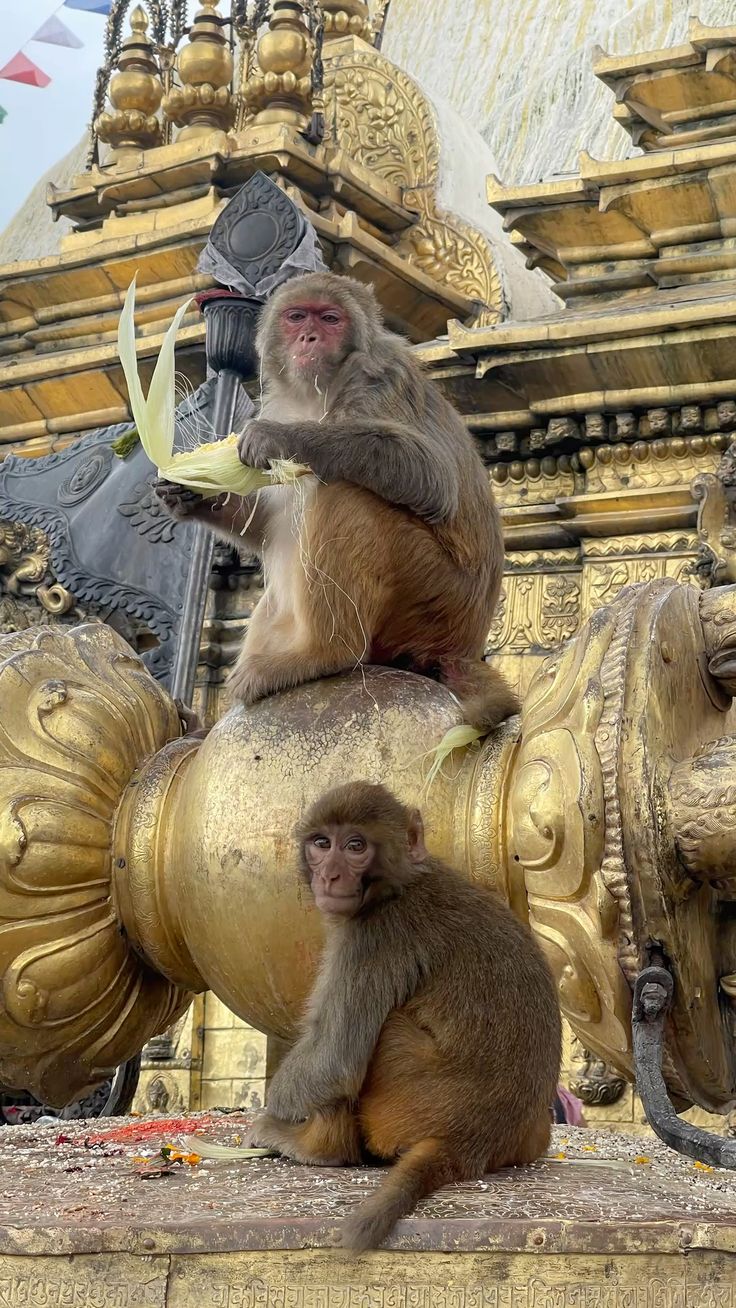
One of the most unique and perhaps most recognizable attractions of Swayambhunath is the troop of monkeys that inhabit the site. They are considered sacred and are cherished and cared for by the local people.
The Origin of the "Monkey Temple"
The name "Monkey Temple" originates from the large number of langur monkeys that live freely within the complex. According to legend, they are descendants of the monkeys that helped Bodhisattva Manjushri level the hill. Therefore, they are considered an integral part and hold a special place in the temple's spirituality.
Daily Life
Visitors will easily spot playful monkeys scampering on the steps, climbing on temple roofs, or sitting casually beside statues. They are frequently fed by locals and tourists, making them quite friendly. However, visitors should also be cautious, maintain a distance, and refrain from disturbing or provoking them to avoid undesirable situations.
Notes on Interaction
When visiting Swayambhunath, visitors should adhere to the management's regulations, avoid feeding monkeys unfamiliar or dangerous food. Always safeguard personal belongings, especially items that might attract monkeys' attention such as glasses, water bottles, or bags. Respect their living space and observe from a distance to ensure a pleasant and safe experience.
Unforgettable Experiences at Swayambhunath
Visiting Swayambhunath is not just about admiring architecture or learning history; it's also an opportunity for visitors to experience Nepalese culture, landscapes, and people in the most authentic way.
Conquering the 365 Steps
The journey to the summit of Swayambhunath hill begins with a steep stone staircase of approximately 365 steps. This is a small but rewarding challenge. Along the way, you'll encounter small stalls selling souvenirs, local handicrafts, and small tea houses. With each step upwards, the view of the Kathmandu Valley gradually unfolds, bringing a sense of excitement and anticipation.
Panoramic Views of Kathmandu
Once you reach the summit, the greatest reward is the breathtaking panoramic view of the Kathmandu Valley. From here, you can admire ancient rooftops, scattered temple spires, and in the distance, the majestic Himalayas peeking through the clouds (weather permitting). Witnessing the sunset over the valley from Swayambhunath is an unforgettable experience.
Exploring Souvenir Shops and Cafes
Along the path leading up to the temple and around the main area, there are numerous shops selling unique Nepalese souvenirs such as Buddha statues, silver jewelry, Pashmina scarves, Thangka paintings, and other handicrafts. This is a great opportunity to buy gifts for loved ones or bring home meaningful mementos. Additionally, small cafes and restaurants serve local food and drinks, offering a place to rest and enjoy.
Witnessing Spiritual Ceremonies
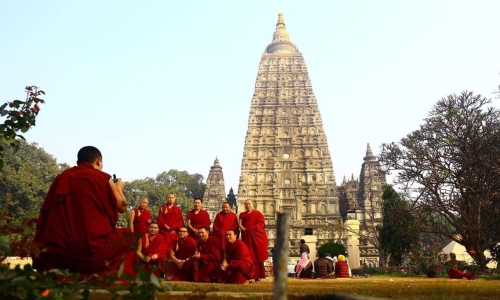
If you're lucky, you may witness monks performing rituals, devotees praying, or locals spinning prayer wheels. The solemn and reverent atmosphere here will bring you special emotions, helping you gain a deeper understanding of the spiritual life of the Nepalese people.
Helpful Tips for Tourists
To ensure a complete and meaningful trip to Swayambhunath, tourists should keep the following in mind:
Ideal Time to Visit
The best time to visit Swayambhunath is during the dry season, from October to May. The weather is usually dry, sunny, and the sky is clear, making it ideal for sightseeing and enjoying the views. The rainy season (June to September) can make travel difficult due to slippery roads and limited visibility caused by fog.
Dress Modestly and Appropriately
Swayambhunath is a sacred religious site, so visitors should dress modestly and respectfully. Avoid wearing overly short or revealing clothing. Wear long pants, tops with sleeves, and prepare a scarf to cover your shoulders if needed. Remove shoes before entering temple areas.
Prepare Currency and Water
There is an entrance fee for Swayambhunath. You should prepare Nepalese Rupees for tickets and expenses such as food, drinks, and souvenirs. Bring a water bottle to stay hydrated, especially when climbing the stairs. Bottled water can be purchased from stalls around the temple area.
Respect Local Culture and Customs
While visiting, show respect for the religious rituals and beliefs of the local people. Avoid making noise, speaking loudly, or engaging in impolite behavior. If taking photos, ask for permission first, especially when photographing monks or rituals.
Getting to Swayambhunath
You can easily reach Swayambhunath by taxi or tuk-tuk from the center of Kathmandu. Prices can be negotiated in advance. Some tourists also choose to walk from nearby areas if they have the time and physical ability.
Connect with Dzogchen Travel for a Spiritual Journey Experience
If you are looking for a meaningful spiritual exploration, combining architectural beauty, cultural depth, and inner peace, Swayambhunath is definitely a must-visit destination. At Dzogchen Travel, we are proud to offer unique travel experiences, from cultural and spiritual exploration tours to personalized services tailored to your needs.
We offer a diverse range of tour packages, from domestic tours exploring the hidden beauty of Vietnam to promising international tours to spiritual lands like Nepal. Whether you are interested in spiritual tourism, volunteer tourism, or simply looking for budget-friendly travel deals, we can cater to your needs.
In addition, Dzogchen Travel provides comprehensive support services for your trip, including hotel bookings, flight tickets, car rental services, visa assistance, and event organization consultancy. Our professional and experienced tour guides will accompany you, providing in-depth knowledge and fascinating stories about the culture and history of each region.
Let Dzogchen Travel be your trusted companion on every exploration journey. Contact us today to start planning your unforgettable spiritual journey to Swayambhunath and many other wonderful destinations.
DZOGCHEN TRAVEL CO., LTD
Address: 151-153 Phu Tho Hoa Street, Phu Tho Hoa Ward, HCM City
Hotline: 0833939768
Phone: 0833939768
Email: xuan@dzogchentravel.com
Website: dzogchentravel.com